


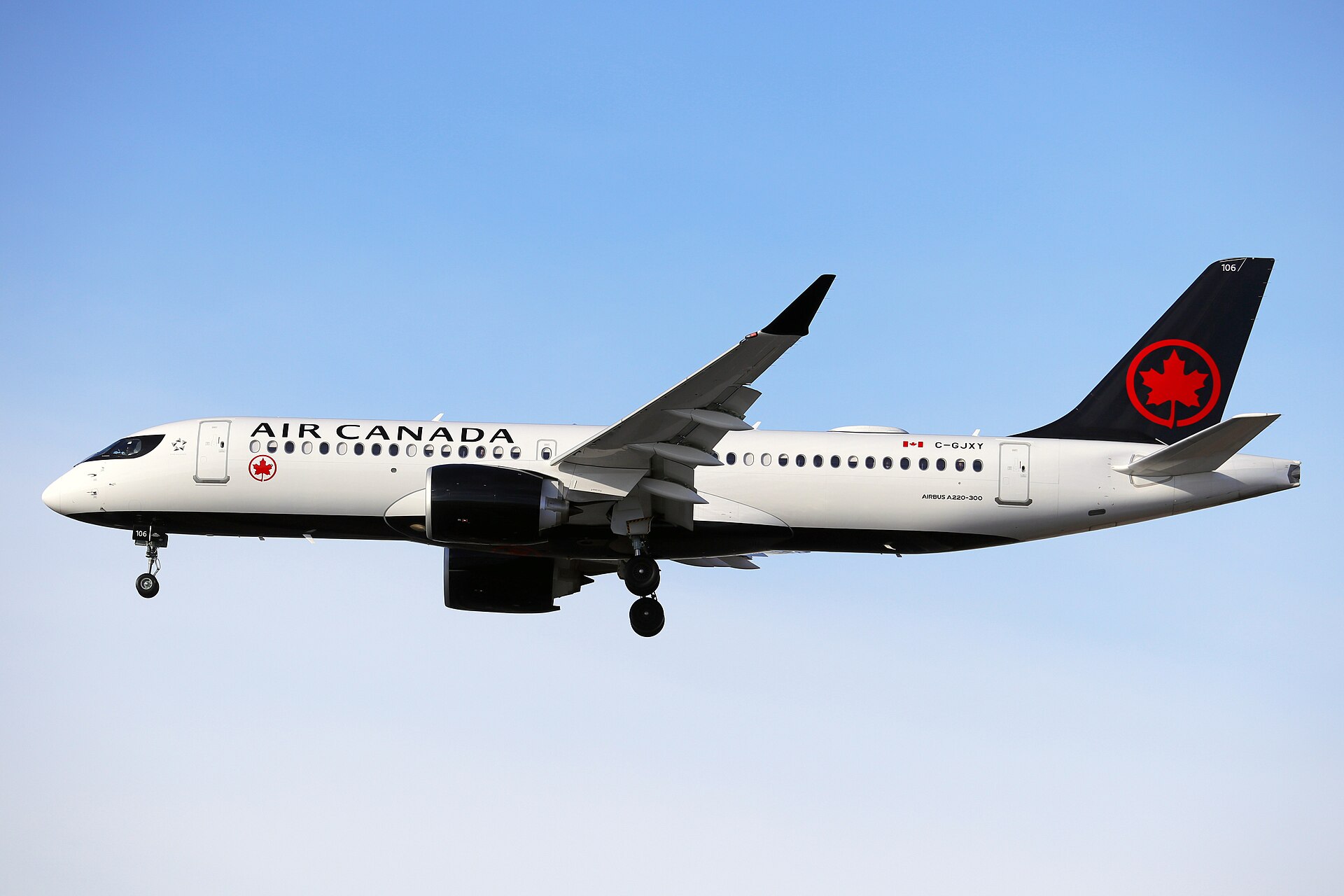
If you fly from Montreal to Washington, Chicago or Houston, a decision now sitting on a federal minister’s desk could affect what you pay. Air Canada and United want to deepen their partnership on a handful of cross-border routes where they are currently barred from fully coordinating. Canada’s Competition Bureau says the result would be higher fares and less choice. Here’s what Air Canada and United are proposing, why the watchdog objects and what happens next.
What Air Canada and United are asking for
The two airlines already cooperate extensively under a transborder joint business arrangement that has been in place since 2022, covering joint pricing, inventory management, revenue sharing and the exchange of sensitive information, as CTV News reported. But ten routes were carved out of that cooperation under a 2012 consent agreement, registered with the Competition Tribunal, after the Bureau concluded similar coordination would substantially harm competition.
The airlines’ proposed amended arrangement would lift those restrictions so they could coordinate on the carved-out routes too.
What is a joint business arrangement?
In plain terms, it lets two airlines act almost like one on the routes it covers: they can set fares together, plan schedules and capacity together and share the revenue. That can mean smoother connections and more combined frequencies for travellers. But on routes where the two partners are also each other’s main competition, it can remove the pressure that keeps prices down, which is exactly the concern on the carved-out routes.
The Montreal routes at stake
According to the Bureau’s report to the Minister of Transport, dated Oct. 16, the ten routes connect Toronto, Montreal, Ottawa and Vancouver with Chicago, Cleveland, Denver, Houston, New York, San Francisco and Washington. Three start at Montréal-Trudeau:
- Montreal–Washington (Reagan National, Dulles or Baltimore): Air Canada and United carry 100 per cent of the traffic, and the Bureau predicts some of the largest fare increases here.
- Montreal–Chicago (O’Hare or Midway): the two airlines held a combined share between 65 and 83 per cent, with American Airlines also present.
- Montreal–Houston (Hobby or Bush Intercontinental).
Why the watchdog objects
The Bureau concluded the arrangement would “create and entrench a monopoly or near-monopoly” on key transborder routes, eliminating the direct rivalry that keeps prices in check. It found barriers to entry are high, with not enough evidence that other airlines would step in quickly, and estimated millions of dollars in consumer harm every year.
“Competition between airlines helps keep fares lower and gives travellers more choice and better service,” interim commissioner Jeanne Pratt said in the Bureau’s release.
Why it matters more in Montreal
Air Canada is headquartered in Montreal, and YUL is one of its principal hubs, alongside Toronto Pearson and Vancouver. That makes Montrealers some of the most exposed travellers in the country to how the airline prices cross-border trips, especially business travellers who rely on non-stop flights to Washington and Chicago.
What happens next
The decision rests with Transport Minister Steven MacKinnon. Under the Canada Transportation Act, the minister had already determined the proposal raises significant public interest considerations, which triggered the Bureau’s review. The Bureau’s report is advice, not a ruling, and no decision date has been announced. The report was formally addressed to both the minister and the two airlines involved. Watch for whether the minister rejects the request, approves it, or approves it with conditions meant to protect competition.
What travellers can do now
- Compare fares across airlines and connecting itineraries, not just non-stops, on the affected routes.
- Consider nearby airports for U.S. trips; the Bureau’s route definitions include several airports on the U.S. side.
Heading somewhere that handles daylight time differently? Our time change explainer covers which parts of Canada no longer switch their clocks.
Other travel files to watch
Quebec travellers have other ongoing stories in the airline world: a class-action lawsuit over vacation package pricing naming several carriers, a rebuke of Air Canada’s CEO by the official languages commissioner, and Montreal-based Transat’s federal loan as fuel costs bite.
For more on competition and the cost of doing business in Quebec, read our piece on Quebec’s small businesses. Driving instead of flying this winter? Don’t miss the Dec. 1 winter tire deadline. More in our News section.
More on MTL365
- Festival Bach Montréal Turns 20: The Concerts Worth Booking, Including Free Ones
- Game Day: Canadiens vs Utah Mammoth to Close the Homestand
- The Best Tacos in Montreal: 10 Taquerias Worth the Trip
- More Montreal news on MTL365
Photo: Stevenhe1997 / Wikimedia Commons, CC BY-SA 4.0
Sources: Competition Bureau Canada, CTV News, CTV News (class action), CTV News (official languages), BNN Bloomberg
