


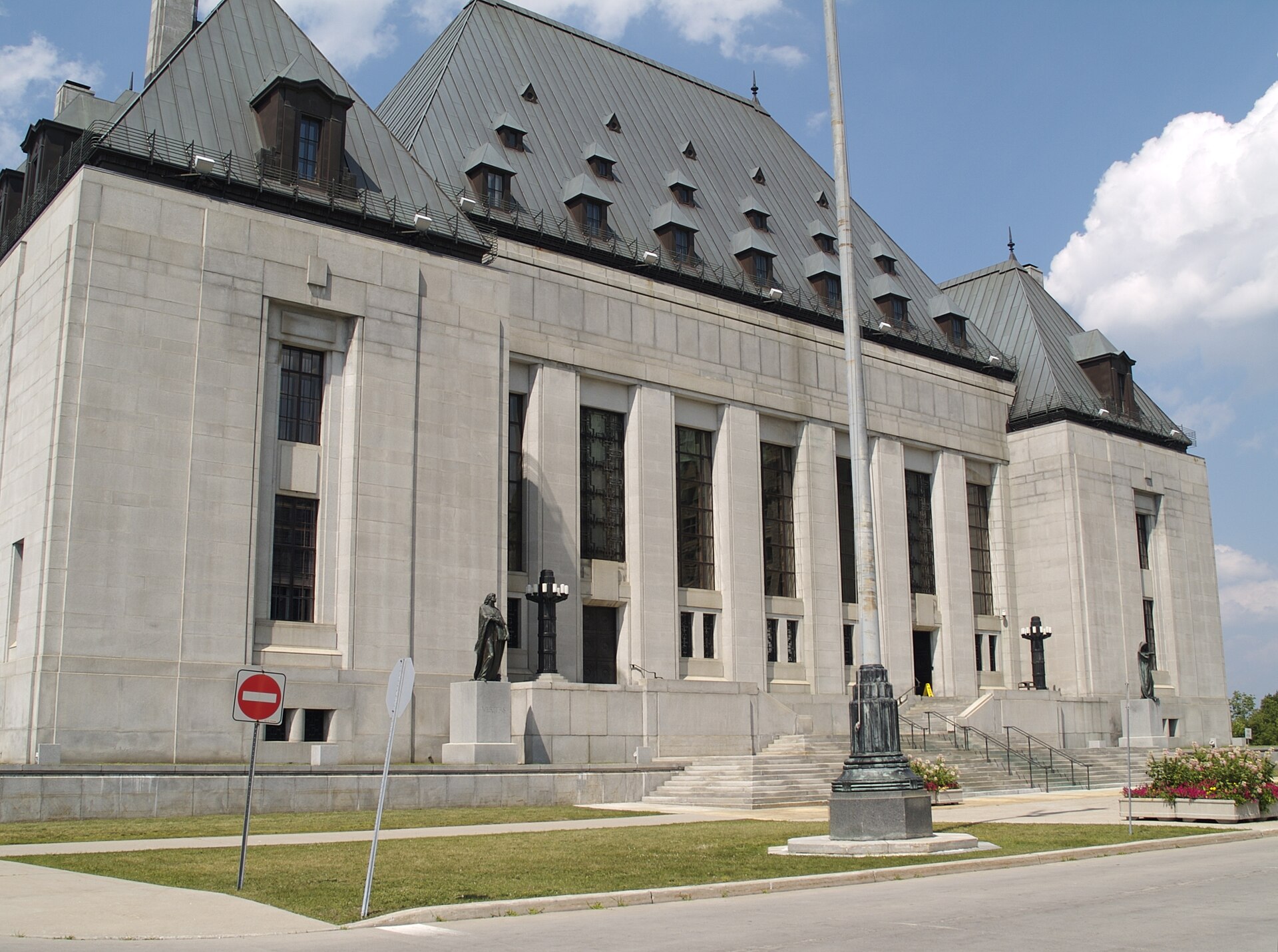
After years of litigation, Canada’s highest court has ruled. On Friday, Nov. 27, the Supreme Court of Canada largely upheld Quebec’s secularism law, known as Bill 21, while carving out one narrow exception and splitting sharply on how courts can treat laws protected by the notwithstanding clause. Here is a plain-language guide to the Bill 21 Supreme Court decision: what the judges decided, how people reacted and what happens next.
For the background going into the ruling, read our explainer, Bill 21 Supreme Court Ruling Is Friday: What Montrealers Should Know.
What Is Bill 21?
Adopted in 2019, Quebec’s Act respecting the laicity of the State bans certain public employees in positions of authority, including public school teachers, police officers and judges, from wearing religious symbols at work. Quebec used the Charter’s notwithstanding clause (section 33) to shield it from challenges under key Charter rights. The appeal was brought by a coalition including the English Montreal School Board, the National Council of Canadian Muslims, the Canadian Civil Liberties Association, the World Sikh Organization and the teachers’ union FAE, and was heard in March 2026, according to the Supreme Court’s case file.
The Bill 21 Supreme Court Decision: The Key Points
The law stands
The court upheld the law, CTV News reported. Writing for himself and justices Côté and Rowe, Chief Justice Richard Wagner said the law “is rooted in Quebec’s legitimate and historical commitment to ensuring the laicity of the state,” as quoted by Canadian Lawyer. On the notwithstanding clause, Wagner wrote that section 33 imposes “only formal requirements” on a legislature, which Quebec met.
One exception: elected members
All seven judges agreed on one carve-out. The rule that public services be given and received with the face uncovered (section 8 of the law) has no force as applied to members of the National Assembly whose religion requires a face covering, because it violates their democratic rights under section 3 of the Charter, according to The Canadian Press via CP24.
A 4-3 split on Charter “declarations”
In a closely watched point, a 4-3 majority said courts still have discretion to declare that a law protected by the notwithstanding clause unjustifiably infringes Charter rights, even if the law stays in force. No such declaration was issued for Bill 21. Lawyers for the teachers’ union FAE hailed this part of the ruling.
Gender equality and English schools
- Section 28 (gender equality): A 4-3 majority said it does not create a separate right that can be used to strike down a law. Justices Karakatsanis and O’Bonsawin, in dissent, called it “the Charter’s other notwithstanding clause,” per HR Reporter.
- Section 23 (minority-language education): The court rejected the English school boards’ argument, finding that while the law could limit their ability to recruit and promote staff, it was not shown to undermine the rights section 23 protects.
The judgment runs to more than 500 pages, with four sets of reasons.
How People Reacted
- The federal government: Prime Minister Mark Carney said Justice officials were carefully studying the ruling and urged all legislatures to respect minority rights.
- The English Montreal School Board: Chair Joe Ortona said, “Ce n’est pas le résultat que l’on souhaitait,” and noted three judges sided with the board on gender equality. He said lobbying would continue ahead of the law’s renewal, as reported by Droit-inc.
- The FAE teachers’ union: Its lawyer called the ruling on declarations a “grosse victoire.”
- Quebec politicians: Conservative leader Éric Duhaime said “la victoire, c’est que c’est le Québec qui décide,” per Noovo. Before the ruling, Premier Paul St-Pierre Plamondon had defended the notwithstanding clause as an essential tool for legislators.
What Happens Next
- The law remains in force. Nothing changes for teachers, police officers or other covered employees.
- The 2029 renewal. A notwithstanding clause expires after five years unless renewed. Quebec renewed it for Bill 21 in 2024, so the next renewal is due in 2029, and opponents have said they will focus their efforts there.
- Future challenges. The court’s ruling that judges may issue declarations could shape how future challenges to laws that use the clause are argued.
- Politics. The ruling lands days before the new National Assembly session opens on Dec. 1; see our preview, Quebec’s National Assembly Returns.
We’ll follow reaction in Montreal’s schools and at the National Assembly. For more local news, browse our News section and our recent explainer on Montreal’s 2027 property tax increase.
More on MTL365
- This Week in Montreal (Nov. 30–Dec. 6): Noël dans le Parc, The Nutcracker Opens, Victoire Home Opener
- Montreal Sports Week Ahead (Nov. 30–Dec. 6): Habs Come Home, Victoire Open Their Title Defence
- The Best Vegan Restaurants in Montreal: 11 Plant-Based Spots From Sushi to Shawarma
- More News: mtl365.ca/category/everyday-news/
Photo: Colin Rose / Wikimedia Commons, CC BY 2.0. Sources: CTV News, CP24 / The Canadian Press, Canadian Lawyer, HR Reporter, Droit-inc, Noovo, Supreme Court of Canada
