


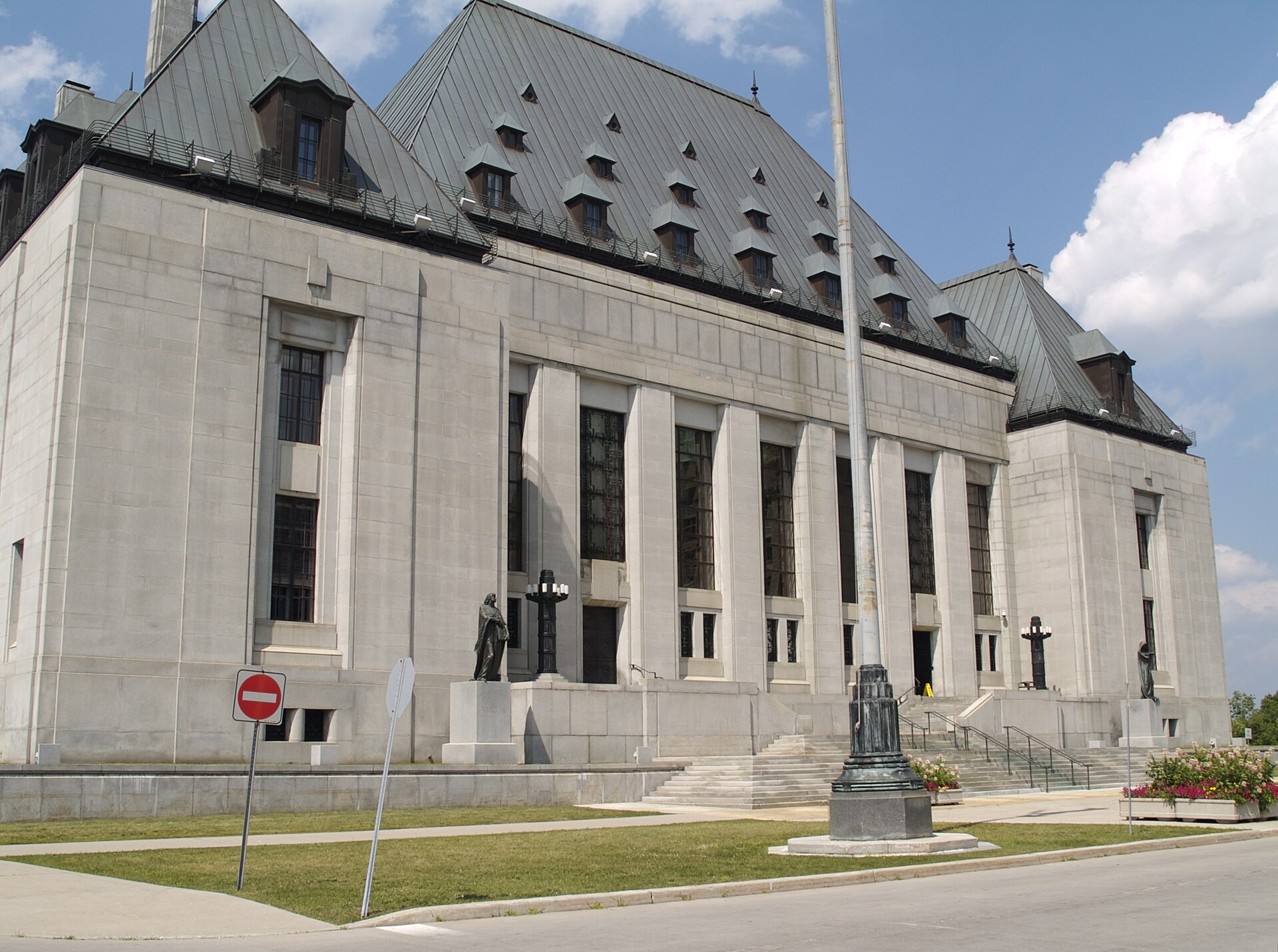
The long wait is almost over. The Bill 21 Supreme Court ruling is scheduled for this Friday, Nov. 27, at 9:45 a.m., when Canada’s highest court will say whether Quebec’s secularism law stands, and how far a province can go when it uses the Charter’s notwithstanding clause. Here is what the law does, how it got to Ottawa, and what to watch for at the end of the week.
The ruling lands in an already busy week for Quebec politics, with Montreal’s 2027 budget tabled on Tuesday and the National Assembly set to return on Dec. 1. For the rest of the week in the city, see our This Week in Montreal guide.
What is Bill 21?
Officially titled An Act respecting the laicity of the State, Bill 21 was adopted by the National Assembly on June 16, 2019. It bans certain public sector employees from wearing religious symbols at work. According to The Canadian Encyclopedia, it covers civil servants in positions of authority, with police officers and judges as examples, as well as public sector teachers. People already employed when the law passed were grandfathered.
Critics say the law violates religious freedom and equality rights and harms groups such as Muslim women who wear the hijab. Supporters frame it as a matter of state neutrality and, as the Canadian Press noted ahead of the ruling, of parental choice for a school free of religious influence.
The notwithstanding clause
When it adopted the law, the government invoked section 33 of the Canadian Charter of Rights and Freedoms, the notwithstanding clause, to shield it from most Charter challenges. That protection must be renewed every five years. In February 2024, Quebec tabled Bill 52 to extend it for another five years, ahead of the original clause’s June 2024 expiry.
How the case reached the Supreme Court
- April 2021, Quebec Superior Court: The law was largely upheld, but the court found it should not apply to English school boards, because minority language education rights are not covered by the notwithstanding clause. It also acknowledged “serious and negative” effects on people who wear religious symbols.
- February 2024, Quebec Court of Appeal: The law was ruled constitutional, and the exemption for English school boards was struck down.
- Next stop, Ottawa: The English Montreal School Board and other challengers took the case to the Supreme Court, where it is known as English Montreal School Board, et al. v. Attorney General of Quebec, et al.
- March 23 to 26, 2026: The court heard four days of arguments, then reserved its decision.
The Supreme Court’s case file lists the English Montreal School Board, the Fédération autonome de l’enseignement, the World Sikh Organization of Canada and teacher Ichrak Nourel Hak among the appellants. The National Council of Canadian Muslims and the Canadian Civil Liberties Association are also parties. According to the Canadian Press, 61 parties submitted arguments, including the federal government.
What is at stake in the Bill 21 Supreme Court ruling
Friday’s decision is expected to answer two separate questions, and the second may matter as much as the first.
1. Does the law itself violate rights?
In February 2026, the court asked the parties to address whether the law infringes, in a way that cannot be justified in a free and democratic society, freedom of conscience, religion and expression and the right to equality, under both the Canadian and Quebec charters. The English Montreal School Board has also argued that the law infringes minority language education rights, which the notwithstanding clause cannot override.
2. What are the limits of the notwithstanding clause?
This is the question with national reach. Quebec’s lawyers argued that a 1988 Supreme Court ruling confirmed the Constitution places no substantive limits on how a government invokes the clause. Ottawa is not challenging Bill 21 itself, but it asked the court to set limits on how provincial legislatures can override fundamental Charter rights. Interveners such as the Canadian Constitution Foundation raised related questions, including whether courts can still issue declarations or award Charter damages when the clause has been used.
Legal observers have described the case as pulling the court in two directions. In an April note, Torys LLP quoted former federal justice minister Arif Virani saying: “It’s something they’ll struggle with.” The firm also noted the court was under pressure to deliver a unified judgment rather than a split one.
What happens Friday, and after
- When: Friday, Nov. 27, at 9:45 a.m., as reported by CTV News and the Canadian Press.
- Where to read it: The decision will be tied to file 41231 on the Supreme Court of Canada website.
- Who it affects in Montreal: Teachers in public schools, including at English school boards, along with police officers, judges and other public servants in positions of authority, plus anyone hoping to take one of those jobs.
- Beyond Quebec: Whatever the court says about section 33 will shape how every province and territory can use the clause in the future.
If the law is upheld and the notwithstanding clause is confirmed with few limits, little would change on the ground. If the court sets new limits on the clause or rules on the minority language question in the English school boards’ favour, Quebec’s government and opposition parties would be expected to respond quickly, likely as soon as the National Assembly sits again in December. We will not speculate on the outcome before the judges speak.
As CTV News put it last week, this is a “highly anticipated” ruling. We will follow up after the decision. In the meantime, find our latest local coverage in the MTL365 news section, including our guide to the Montreal byelections on Dec. 7.
More on MTL365
- Board Game Cafés in Montreal: 6 Cozy Pubs Ludiques for Winter Nights
- Game Day: Canadiens vs Kings at the Bell Centre
- The Best Hot Pot in Montreal: 8 Spots for Bubbling Broth This Winter
- More News stories: mtl365.ca/category/news/
Photo: Colin Rose / Wikimedia Commons, CC BY 2.0. Sources: CP24 / Canadian Press, Supreme Court of Canada, CTV News Montreal, The Canadian Encyclopedia, Global News, Torys LLP
